
English| EUR
Suggested for you
More currencies
Choose a language
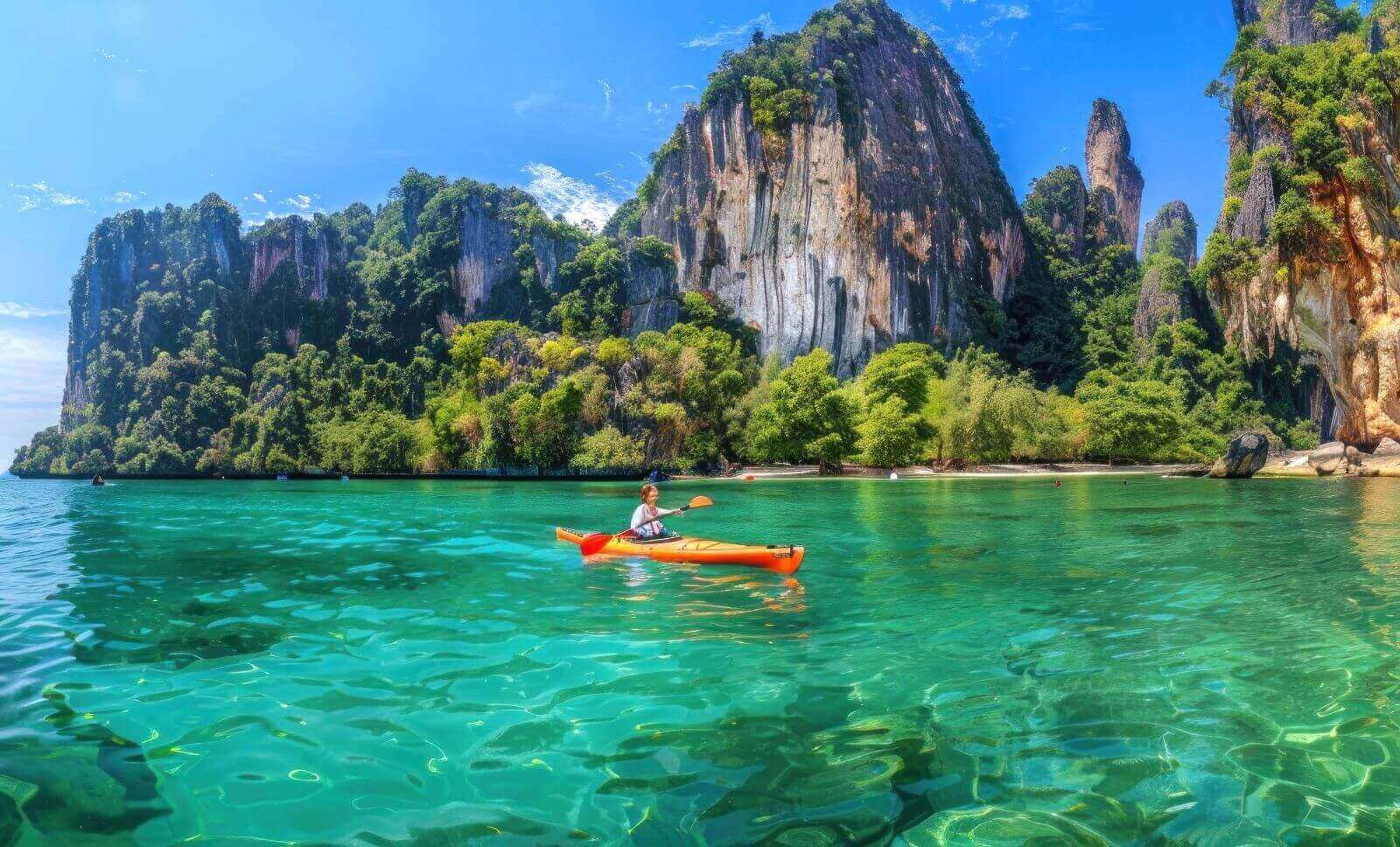
Phang Nga Bay operates under national marine park regulations that govern every kayak entry into its limestone-karst ecosystem. These kayaking guidelines protect both paddlers and the 42,000-hectare conservation zone where tidal caves flood twice daily and long-tail boat traffic shares narrow channels with tour groups.
Quick answer
All kayakers in Phang Nga Bay must wear life jackets throughout the paddle, stay within designated tour routes marked by the Department of National Parks, and avoid contact with limestone walls or mangrove roots. The marine park enforces a 300 THB conservation fee per foreign adult, operates daily from 08:00 to 17:00, and prohibits solo paddling in tidal cave systems without a licensed guide present.
Ninety percent of kayak-related incidents in Ao Phang Nga National Park trace back to three violations: paddlers removing life jackets in calm lagoons, touching cave walls coated in algae that takes decades to regrow, and entering hongs during outgoing tides when water levels drop too fast for safe exit. The marine park divides its waters into three kayaking zones. Green routes circle James Bond Island and Panak Island with minimal tidal variance and constant ranger patrols. Yellow routes thread through collapsed cave systems at Tham Lod and Hong Island where ceiling clearance changes by two meters between high and low tide. Red routes—closed to independent paddlers—protect nesting sites and require permit-holding operators with tide-table training. Paddling rules prohibit standing in kayaks, feeding macaques on cliff faces, and approaching long-tail boats closer than ten meters in the narrow channels between Khao Phing Kan and Ko Panyi. Rangers stationed at the Tha Dan checkpoint inspect every kayak for required safety gear before allowing bay entry. Cave kayaking demands specific conduct. Paddlers must maintain single-file spacing through low-ceiling passages, switch headlamps to red light when bats cluster overhead, and halt all forward motion when guides signal tidal-shift warnings. The lagoons inside collapsed caverns—hongs in Thai—flood through submerged tunnels that create unpredictable currents during the moon's second and fourth quarters. Kayaking guidelines require all groups to exit hongs thirty minutes before predicted tide peaks, the window when currents reverse direction and trap kayaks against tunnel ceilings. Mangrove channels around Ko Panyi enforce no-wake paddling to prevent root erosion, and limestone walls throughout the bay carry strictly-enforced no-touch policies after decades of algae damage from hands and paddle strikes. The Department of National Parks posts real-time tide tables and weather alerts at the Baan Tha Dan office, and rangers close yellow routes without notice when winds exceed fifteen knots or when storm cells approach from the Andaman Sea.
“Rangers stationed at the Tha Dan checkpoint inspect every kayak for required safety gear before allowing bay entry.”
The best arrival window for kayaking in Phang Nga Bay is 08:00–10:00 to avoid peak crowds and heat. Planning your visit around tidal shifts is essential for gaining access to the sea caves.
Dry, 25°C to 32°C. Ideal conditions for paddling.
These months offer the most stable weather for open-water kayaking. Clear skies provide high visibility for limestone formations.
Humid, 24°C to 31°C. Frequent short rain showers.
Expect more precipitation, but tides remain the primary factor for cave entry. Lower visitor numbers allow for a quieter experience.
—
Arrive between 08:00 and 10:00 to escape the heat and large tour groups. Early access ensures better tidal alignment for exploring hidden hongs.
Verdict: The most effective timing is between 08:00 and 10:00 on weekdays during the transition months of April or November.
Phang Nga Bay's limestone karsts, mangrove channels, and marine caves form a fragile ecosystem that requires careful visitor conduct. Following these guidelines protects the bay's geology and wildlife while ensuring sustainable access for future paddlers.
Pack the right gear and documents to stay safe and comfortable on the water.
Everything you need to know about kayaking guidelines
Adhering to kayaking guidelines helps protect the fragile limestone karst ecosystems and marine life of the bay. Always maintain a safe distance from rock formations and follow the instructions of your guide to preserve the natural habitat. Visitors should respect the park's environmental policies at all times.
While exploring, you must remain in authorized zones to minimize environmental impact. These sea canoe adventure protocols are designed to ensure safety while navigating narrow cave passages. Responsible tourism practices remain a key part of our official kayaking guidelines.
To follow proper kayaking guidelines, bring sun protection, a dry bag for electronics, and appropriate footwear for limestone surfaces. Keeping your gear secure helps prevent accidental loss or damage in the water. We recommend traveling light to maximize comfort during your time on the bay.
While independent exploration is restricted, booking a tour provides access to experienced guides familiar with tide-dependent cave access. These local professionals manage the logistics of the trip while ensuring visitors understand the necessary etiquette. Relying on expert knowledge is essential for a safe visit.
Phuket Kayaking Tours
Read more Tickets & toursMangrove Kayaking Phuket
Read more GuideSea Kayaking Phuket
Read more GuidePhuket Travel Requirements & Tips
Read more Tickets & toursBioluminescent Kayaking Phuket
Read more Tickets & toursPhuket Caves & Mangrove Kayaking
Read more